
Lalamove Driver - Drive & Earn
Lalamove Media LimitedMaps & Navigation
4.333.00 Reviews
- Version
- 117.6.0
- Installs
- 10.00M
- Age Rating
- Everyone
Screenshots
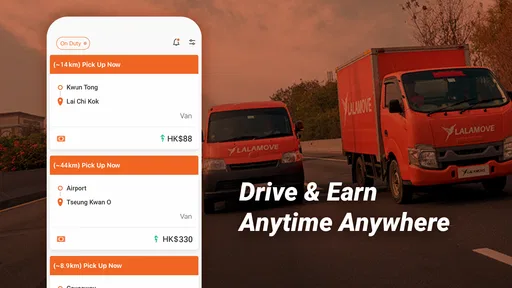
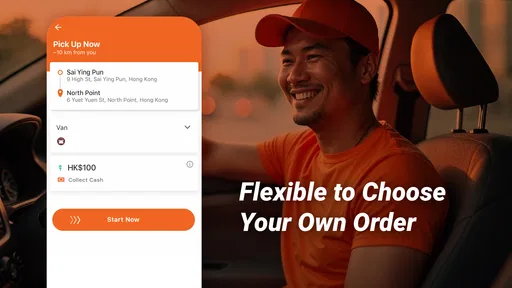
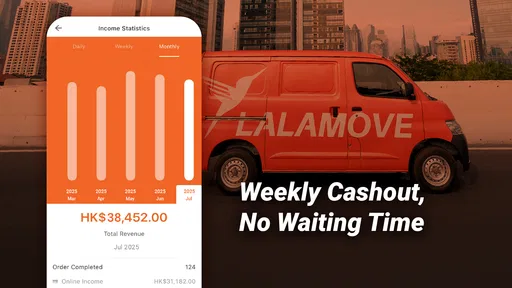
Our Review of Lalamove Driver - Drive & Earn
 Analysis by Appyee
I look at Lalamove Driver as a work tool rather than a general navigation app. It is built for people who want to accept delivery or transport jobs through their phone, manage the working side of those jobs, and make better use of time spent on the road. That distinction matters: someone searching for turn-by-turn directions alone will probably be happier with a conventional maps app, while a driver looking for a way to connect driving with paid assignments may find this much more relevant.
My first impression is that the app makes the most sense when I judge it by a practical question: does it help me organize driving work with less friction? The answer depends heavily on where I drive, what vehicle I use, how often I want to work, and whether I am comfortable handling the responsibilities that come with delivery work. It is free to install, aimed at Everyone, and developed by Lalamove Media Limited. Its store presence is substantial, with a 4.3 average from around 403 thousand ratings and more than 10 million installs, so it is clearly not a niche experiment.
What I would check before choosing a driver platform
Before relying on any driver app, I would separate convenience from earning potential. A polished interface cannot guarantee that enough suitable jobs will appear in my area, and an attractive bonus does not automatically make every trip worthwhile. I would first consider whether Lalamove operates meaningfully in my location, whether the available requests match my vehicle, and whether the distances, waiting time, pickup arrangements, and return journeys fit my routine.
I would also think about the type of work I actually want. A driver who already has a full-time job may value the ability to look for occasional assignments, while someone treating driving as a primary income source needs a steadier workflow and a careful way to track expenses. Fuel, maintenance, parking, tolls, insurance, phone use, and unpaid travel can change the real result of a busy day. The app may help me find work, but it does not remove the need to calculate whether each job is sensible.
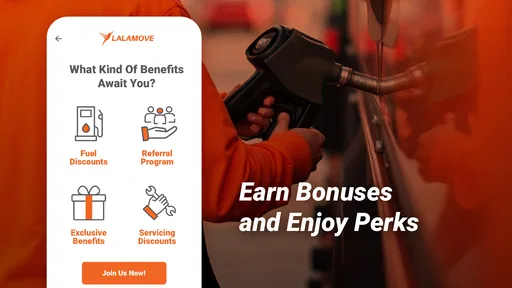
The store summary focuses on easier cash-out, attractive bonuses, and exclusive benefits. I read that as a sign that the driver experience is not limited to finding a request and following a route. Payment timing and incentive conditions can influence whether a platform is useful in practice. I would therefore read the terms attached to each offer rather than assuming every bonus applies automatically or that the highest gross amount is the amount I will keep.
Another decision point is how much control I want over my day. A driver marketplace can be useful when I prefer to choose when to work, but flexibility can also mean uneven demand. If I need guaranteed hours, a fixed delivery contract, or a predictable route, an app-based system may not be the best match. If I value the ability to check opportunities around other commitments, the model becomes more appealing.
The everyday workflow I found most useful
A realistic example is a weekday afternoon when I am already near a commercial district and have a few hours free. Instead of driving around hoping to find work, I can use the driver app as a starting point for deciding whether it is worth staying available. I would review the request, consider the pickup and drop-off relationship, and think about where the trip leaves me afterward. A job that ends near another active area may be more useful than one that sends me far away with no obvious next opportunity.
That last step is easy to overlook. New drivers often focus on the amount shown for a single assignment and forget the empty distance after completion. I would treat the app as one part of a broader route plan: check where I am, check where the request ends, estimate the time involved, and only then decide. This habit is more valuable than simply accepting the first available task.
For a small business owner who occasionally drives, the same workflow can work in reverse. If I already have errands in a particular part of town, I might look for a compatible delivery that fits the journey rather than making a separate trip. That does not mean every request can be combined with personal plans, but it shows where a driver-focused marketplace can be more useful than a standard navigation tool.
Where the app has a practical advantage
The strongest advantage is that it puts the driver side of a delivery platform in one place. A normal maps application can calculate a route, show traffic, and help me find an address, but it does not normally connect that route with a stream of delivery opportunities, driver earnings, or platform incentives. Lalamove Driver is designed around the work decision that comes before navigation: whether to take a job and how it fits into my day.
I also like the emphasis on cash-out and driver benefits because payment administration can become an annoying part of gig work. Even when the actual process is straightforward, having earning-related information close to the work screen is more convenient than keeping separate notes and switching between unrelated services. I would still keep my own record of completed work and expenses, but the app can reduce the amount of manual organization needed.
A second useful strength is the possibility of treating the platform as a flexible supplement rather than an all-or-nothing commitment. Someone who drives part time may not want a rigid schedule. The app is better suited to that person than a traditional employer-managed delivery route, provided local demand is sufficient and the driver is willing to make careful choices about time and costs.
The scale of the service also gives it a degree of reassurance for someone trying this type of work for the first time. A rating of 4.3 and a user base represented by over 10 million installs do not prove that every driver will have the same experience, but they suggest that the application has reached a broad audience. I would take that as a reason to investigate it seriously, not as a promise of guaranteed earnings.
Small habits that can improve the experience
My first tip would be to prepare before becoming available. I would make sure the phone is charged, the vehicle is ready, and the day’s likely driving area is familiar enough that I am not learning every street while handling a delivery. This sounds basic, but a driver app cannot compensate for a low battery, poor preparation, or a vehicle that is not suited to the work I accept.
My second tip is to compare the whole trip rather than the visible payout. I would include the journey to pickup, likely waiting time, parking difficulty, and the distance after drop-off. This is especially important in dense areas where a short delivery can still consume considerable time. The most attractive assignment on screen may not be the best assignment once those hidden costs are considered.
My third tip is to treat bonuses as a planning aid, not as the foundation of the business. If an incentive fits work I would already consider worthwhile, it can improve the result. If I find myself accepting unsuitable jobs only to chase a threshold, the bonus may be distorting my decisions. I would check the specific conditions in the app and calculate whether the extra effort is genuinely worthwhile.
A fourth habit is to review the day after finishing. I would note the number of hours spent, total distance, fuel and parking costs, and the amount of time spent waiting. This gives me a more honest picture than the app’s gross earning figure alone. It also helps reveal patterns: perhaps evenings are more convenient, perhaps certain areas create too much dead mileage, or perhaps a particular vehicle is expensive to operate for short trips.
Where a different kind of app may fit better
Lalamove Driver is not a universal replacement for every driving app. If my main need is navigation, a dedicated maps service is likely better because it is designed around route discovery and road guidance rather than earning opportunities. I would use the two categories together when necessary: the driver platform for work decisions and the navigation tool for detailed orientation, especially in unfamiliar neighborhoods.
If I want passenger rides instead of deliveries, a ride-hailing driver platform may fit my routine more closely. Passenger work and delivery work involve different expectations, vehicle arrangements, and interactions. I would not choose this app simply because I already drive; I would choose it because moving goods or completing delivery assignments suits me better than carrying passengers.
Traditional courier employment may be preferable for someone who values a fixed schedule, company-provided procedures, or more predictable daily planning. The trade-off is usually less flexibility. On the other hand, another independent-driver marketplace may be a better comparison if it has stronger demand in my city or offers work that matches my vehicle more closely. Without inventing claims about rival services, the sensible approach is to compare actual local availability, payout handling, distance patterns, and the effort required to get started.
I would also be cautious if I dislike administrative uncertainty. Flexible work can require more personal responsibility than a conventional job. I need to monitor expenses, manage my availability, protect time for vehicle upkeep, and decide which assignments make economic sense. Someone who wants the app to make all those decisions automatically may become frustrated.
What switching really costs
The app itself is free, which lowers the initial barrier to trying it. It supports devices running Android 5.0 or later, and the current version is 117.6.0. Those details make it accessible to many Android users, although the practical experience still depends on the phone’s condition, battery life, mobile connection, and the driver’s ability to use it safely while parked rather than while moving.
The larger cost of switching is not the download. It is the time spent learning the workflow, preparing a vehicle, understanding how assignments are presented, and building a personal method for judging jobs. I would not make the switch during a financially important week without first testing how naturally the app fits my routine. A short trial period, combined with careful notes, would tell me more than a quick glance at the store page.
There is also an opportunity cost. When I accept one delivery, I may lose the chance to take another request, complete a personal errand, or return to a more productive area. That is why I would avoid judging the platform by one unusually good or bad day. The useful question is whether it consistently helps me spend driving time better than my current alternative.
For someone already using another driver platform, I would not immediately abandon it. Running both options, where permitted and practical, may reveal which one suits the local market. I would compare the quality of available work, the clarity of earnings information, the ease of cash-out, and how much time each app demands between assignments. The best choice may be the one that produces the clearest decisions, not simply the one with the most prominent promotional message.
Who should try it and who should skip it
I would recommend giving Lalamove Driver a serious look if I already own a suitable vehicle, want flexible delivery work, and am comfortable managing my own operating costs. It is particularly relevant to part-time drivers, people with changing schedules, and drivers who prefer goods delivery to passenger transport. The free entry point makes experimentation easier, while the focus on cash-out and bonuses may appeal to users who care about how earnings are handled after completing jobs.
I would be more hesitant if I need a guaranteed income, have very limited time for vehicle maintenance, or dislike evaluating whether a request is profitable after expenses. I would also skip it as my primary tool if all I want is reliable road navigation. In that situation, the app solves a different problem from the one I have.
New drivers should approach it with realistic expectations. A large install base and strong average rating can indicate that many people find value in the service, but neither figure tells me how busy my specific area will be at the hours I can work. Local demand is the deciding factor. I would test availability at my actual working times before making plans around it.
My recommendation after weighing the trade-offs
My recommendation is positive, with an important condition: I would use Lalamove Driver as a flexible delivery-work tool, not as a promise of automatic earnings. Its purpose is clear, its free access makes testing straightforward, and its driver-oriented approach separates it from ordinary maps apps. The attention to cash-out, bonuses, and benefits gives the experience a practical focus that matters once I move beyond simply finding an address.
What makes it worth trying is the way it can support better decisions during spare driving time. I can consider a request in relation to my location, vehicle, schedule, and likely next move instead of treating every trip as an isolated task. That requires discipline, but the app is more useful when I use it as part of a personal operating routine rather than expecting it to do the financial thinking for me.
I would start small, record real costs, and compare the results with whatever I currently use. If the available assignments fit my area and the cash-out process works comfortably for my needs, the platform could become a worthwhile source of flexible work. If demand is weak, trips create too much unpaid distance, or I need predictable employment, a different category of service will be the better answer.
In short, the best reason to choose this app is control over when and how I look for delivery work. The best reason to hesitate is that flexibility still requires careful judgment. For the right driver, that balance is reasonable, and the broad adoption reflected by its 4.3 average and more than 10 million installs makes it a credible option to test. I would recommend it to practical, self-directed drivers who are ready to measure the real value of each trip rather than chase every offer on the screen.
Verdict
Strengths of Lalamove Driver - Drive & Earn
- Flexible schedule lets drivers choose when to accept delivery jobs.
- Supports multiple vehicle types, including motorcycles, cars, vans, and trucks.
- In-app navigation and order details help simplify delivery planning.
- Real-time earnings and job information make payments easier to track.
- Available delivery requests can provide extra income during spare hours.
Limitations of Lalamove Driver - Drive & Earn
- Earnings can vary significantly depending on location, demand, and vehicle costs.
- Drivers may need to cover fuel, maintenance, insurance, and other operating expenses.
- Busy periods can bring intense competition for the most profitable orders.
- Some deliveries may involve waiting time at pickup or drop-off locations.
- Account approval and document checks may delay the start of driving.
Other Releases by Lalamove Media Limited
View All
Lalamove - Fast & Affordable
Maps & Navigation4.5
Similar Picks in This Category
View All
Uber - Request a ride
Uber Technologies, Inc.4.7


inDrive. Rides with fair fares
® SUOL INNOVATIONS LTD4.8

Yandex Go: Taxi Food Delivery
Mikromobilnost LLC Belgrade4.8

Bolt: Request a Ride
Bolt Technology4.8

Rapido: Bike-Taxi, Auto & Cabs
Rapido Bike Taxi4.8
Frequently Asked Questions
What is Lalamove Driver – Drive & Earn?
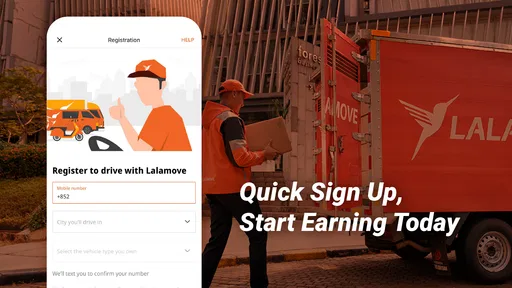
Lalamove Driver – Drive & Earn is a driver-partner app for people who want to accept delivery and transportation jobs through the Lalamove platform. After registering and completing the required verification, drivers can view available orders, check pickup and drop-off details, navigate to customers, and manage completed trips directly from their Android or iOS device. Availability and services depend on your city.
Who can register as a Lalamove driver?
Eligibility varies by country and vehicle type, but applicants generally need to meet local age requirements, provide valid identification, and submit driving, vehicle, and insurance documents where applicable. Lalamove may also require background checks, vehicle inspections, or other verification steps. Before downloading, check the requirements shown in your local Lalamove Driver app because rules differ between regions.
How do drivers earn money with Lalamove?
Drivers earn by completing delivery or transport orders offered through the platform. The amount can depend on factors such as distance, vehicle category, route, demand, promotions, and local pricing rules. The app normally displays order information and estimated earnings before acceptance, although actual income is affected by fuel, maintenance, taxes, waiting time, and the number of jobs available in your area.
Does Lalamove Driver guarantee a fixed income or a steady number of orders?
No. Lalamove Driver should not be treated as a guaranteed salary or fixed-income job. Order volume can change according to location, time of day, customer demand, weather, competition, and the vehicle categories supported in your market. Promotional incentives may also have specific conditions. Review the local terms carefully and calculate operating expenses before relying on the app as your primary source of income.
What permissions and phone features does the app require?
The app commonly needs access to location services so it can show nearby orders, support navigation, and update customers about a driver’s progress. It may also request camera, photo, notification, and storage permissions for document uploads, proof of delivery, and order communication. You should use a reliable internet connection, keep location services enabled while working, and review privacy settings before granting access.
